
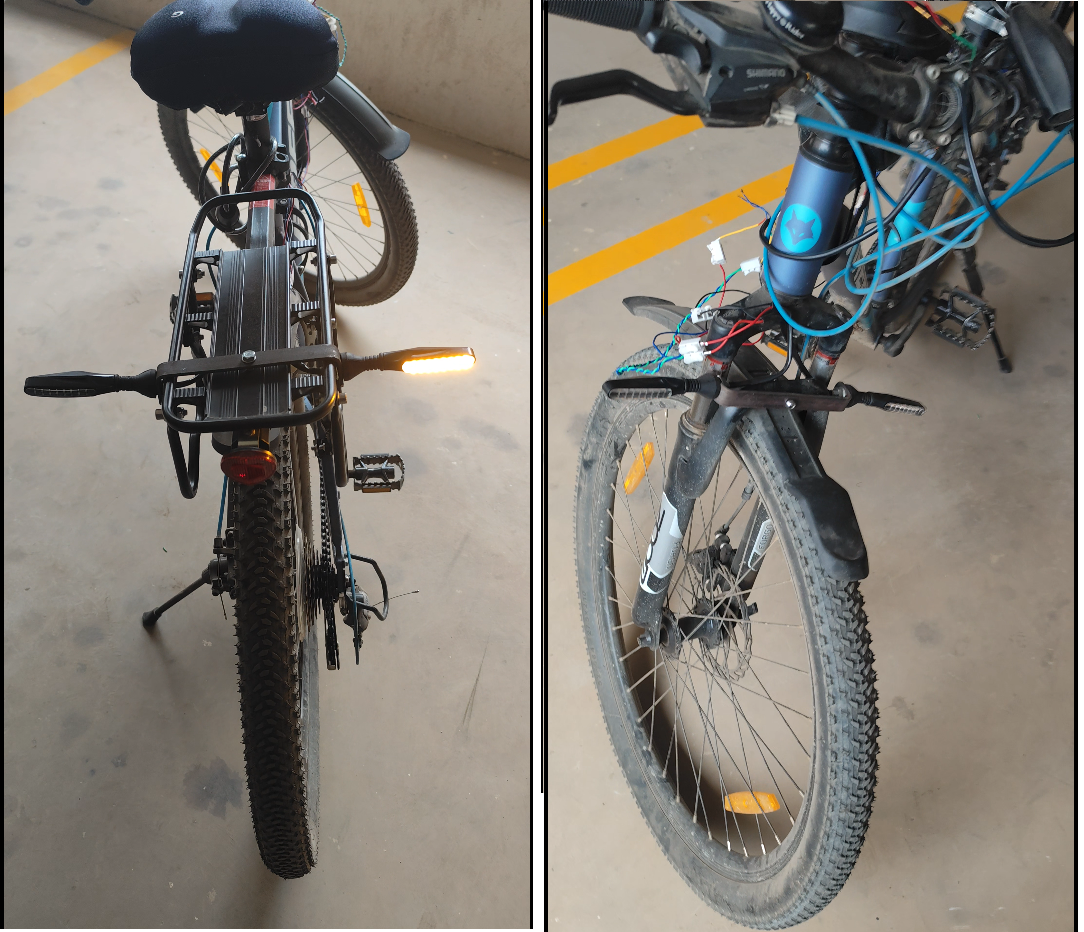
This article documents a v2 upgrade to my smart cycling setup. In my earlier build, turn indicators were implemented using an ESP32 and low-power LEDs. While that approach worked functionally, real-world riding—especially at night—made one thing clear: visibility and reliability matter more than programmability for safety-critical components.
👉 Reference (v1 build): Smart Cycling Upgrade DIY – ESP32-C3 Indicator & Horn System
(This new build intentionally removes the ESP32 from the indicator circuit and focuses purely on hardware reliability and brightness.)
Why This Upgrade?
During night rides and low-light conditions, the original LED-based indicators were:
- ❌ Not bright enough to grab attention from a distance
- ❌ Easy to miss in real traffic with vehicle headlights around
Turn indicators are a safety feature, not an experiment. For this upgrade, I decided to:
- Remove all firmware, Wi-Fi, and microcontrollers from the lighting path
- Use motorcycle-grade 12V indicators and flasher hardware
- Power everything safely from a USB power bank
The result is a simple, robust, and highly visible indicator system that just works.
Items Used
| Product Name | Product Description | Product Link | Estimated Cost |
|---|---|---|---|
| Mi Power Bank | 5V USB power source used to safely power the system | — | Old, but using the same which i use for Phone Charging. |
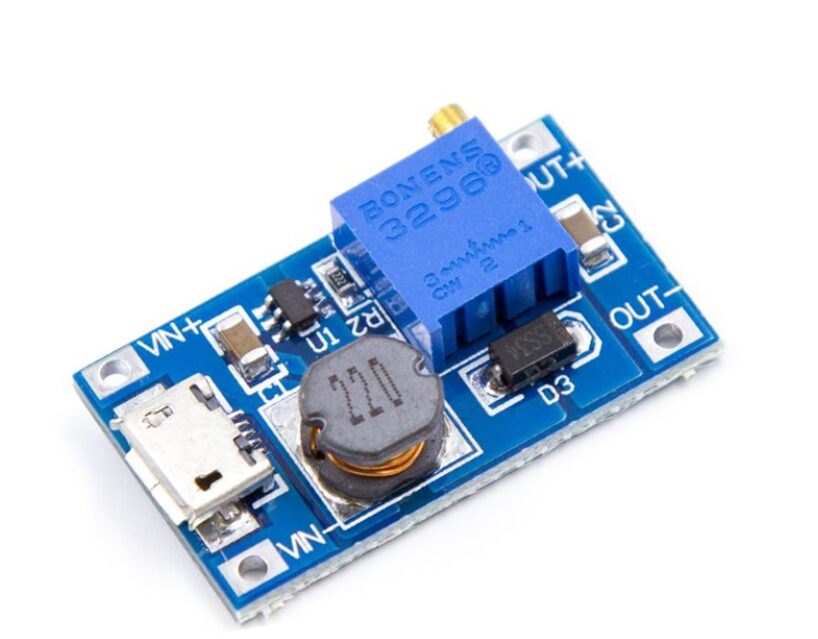
| XY-016 DC-DC Step-Up Converter | Boosts 5V from power bank to stable 12V output | https://robu.in/product/xy-016-2a-dc-dc-step-up-5v-9v-12v-28v-power-module-with-micro-usb/ | Rs 43/- |
| Motorcycle Turn Signal Flasher Relay & Inline ON/OFF Switch | Waterproof LED flasher relay with multiple patterns Allows enabling or disabling the flasher circuit | https://www.amazon.in/dp/B0D87GSHQ8 | Rs 199/- |
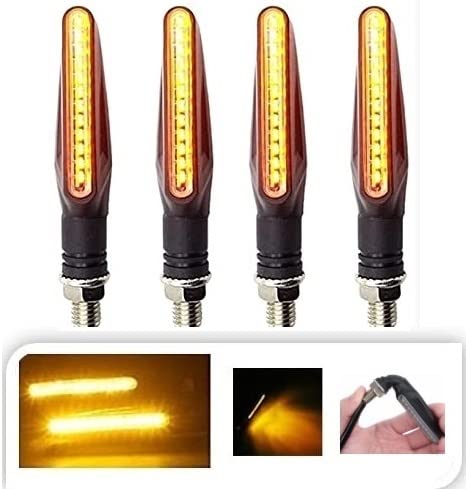
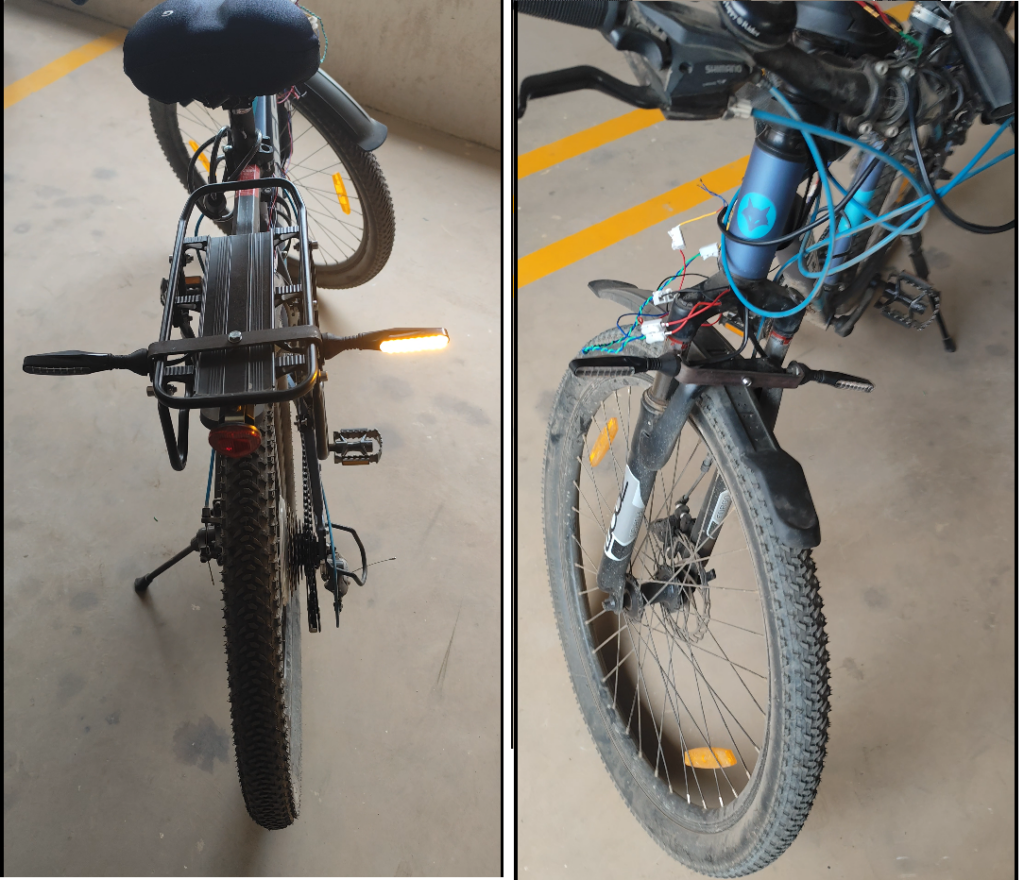
| ELTRON TURBO ELT897 Indicators (Pack of 4) | High-brightness 9-LED amber motorcycle indicators | https://www.amazon.in/dp/B09BZRR812 | Rs 198/- |
| Wiring & Accessories | Wires, connectors, heat-shrink, cable ties | (Less than 50 Rs) | |
| Custom Metal U-Shaped Bracket | Locally fabricated metal mount for indicators | — | Rs 100/- |
Wiring Overview (High Level)
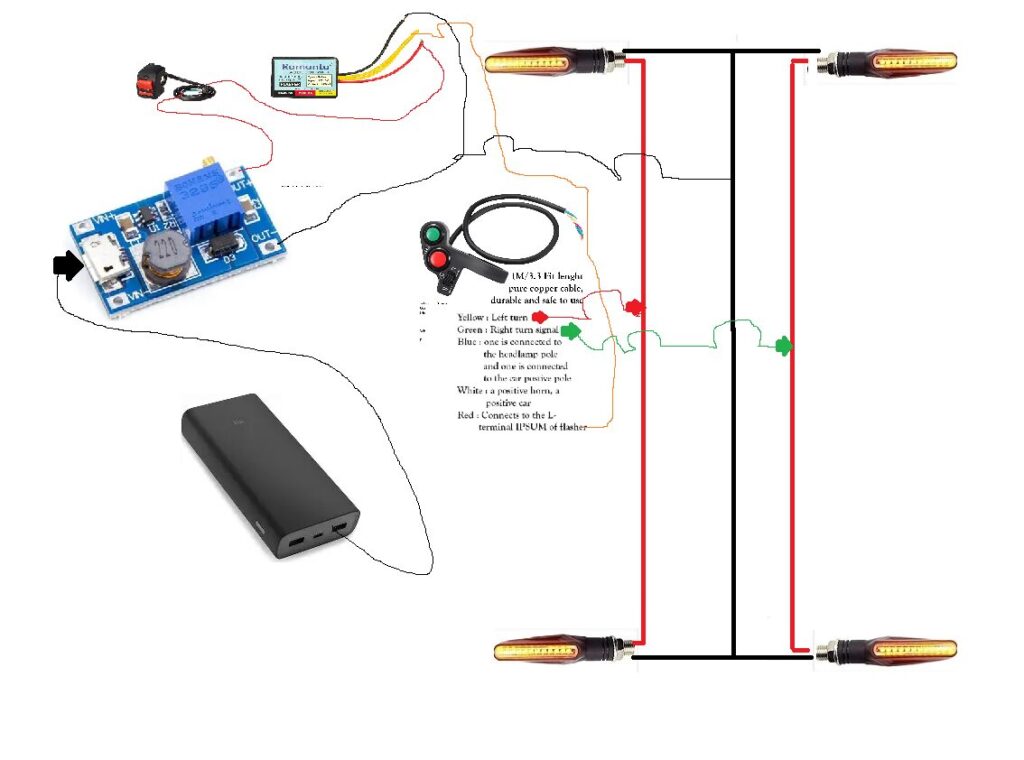
- Mi Power Bank (5V) feeds the XY-016 DC-DC Step-Up Converter
- Converter output is set to 12V
- 12V output goes through an inline ON/OFF switch
- Switch output feeds the motorcycle flasher relay
- From the flasher relay:
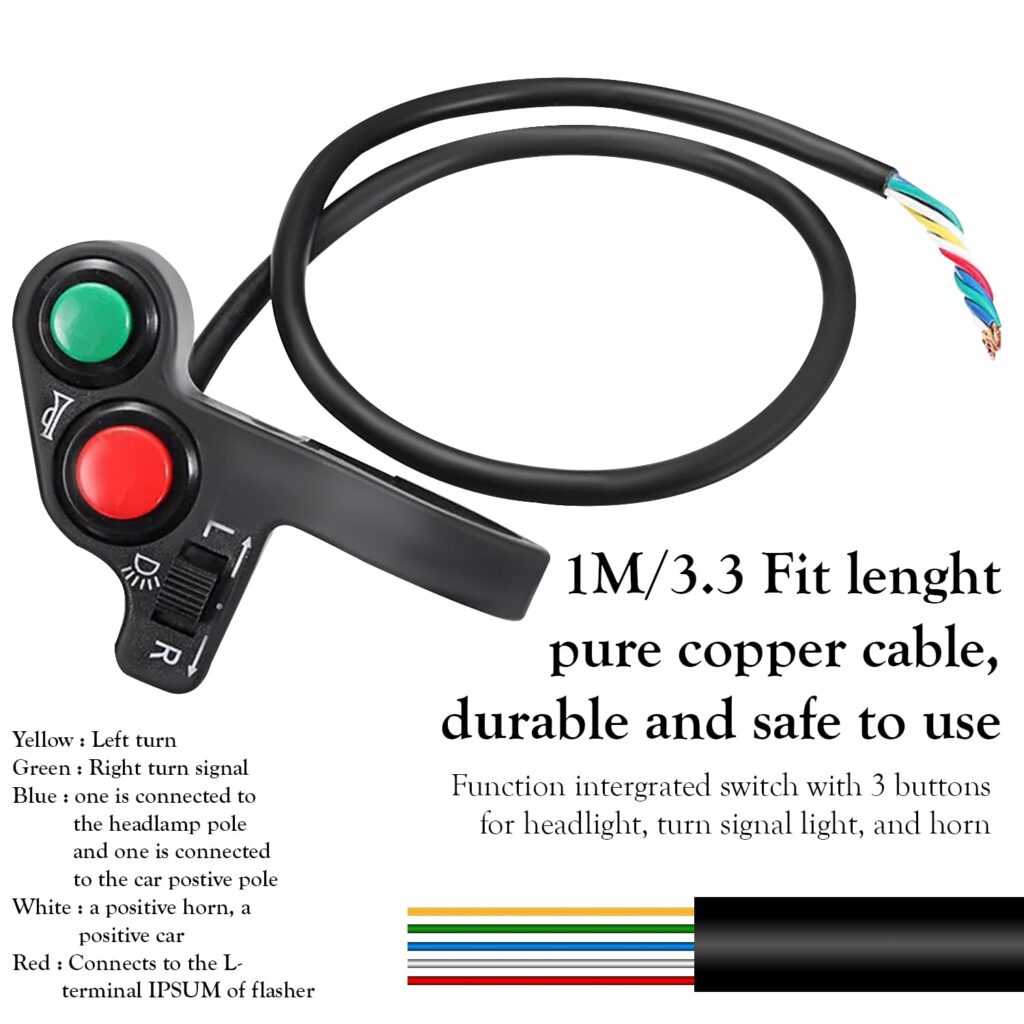
- Yellow wire → Left-side indicators
- Green wire → Right-side indicators
- Common Ground (GND) is shared across:
- Step-up converter
- Flasher relay
- All indicators
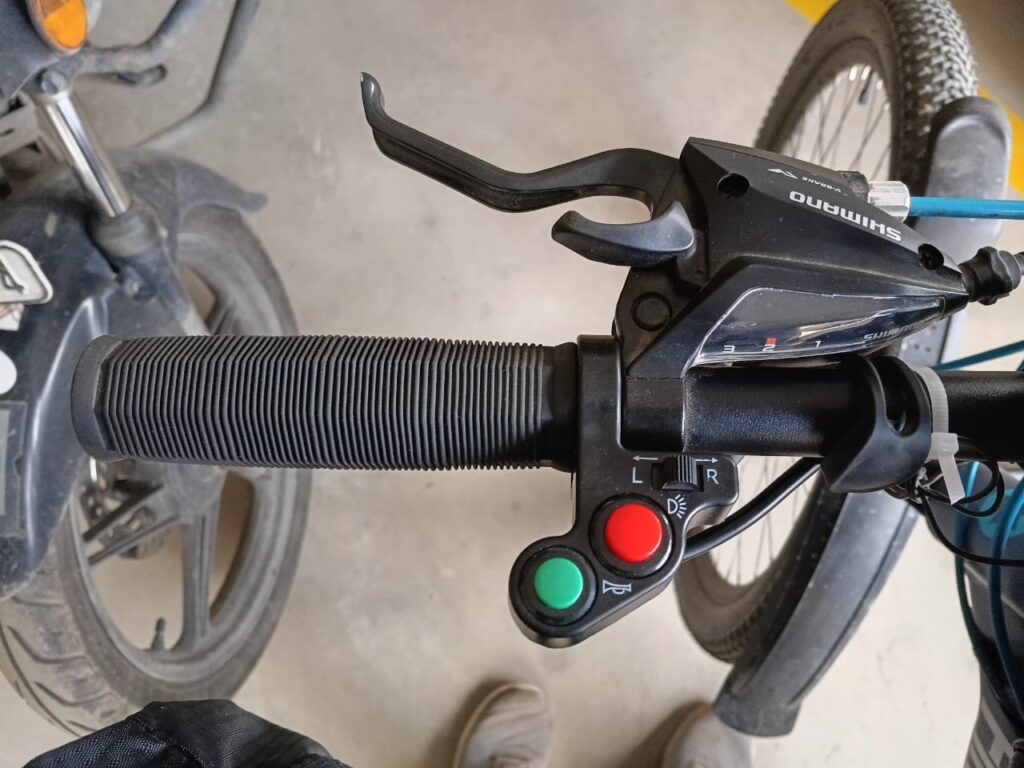
A rough wiring diagram (hand-drawn using MS Paint) is included in the post for clarity.

Advantages of This Design
- Massive improvement in brightness and visibility
- No software, no firmware, no boot time
- Safe and easily rechargeable power source
- Waterproof, vibration-resistant motorcycle components
- Easy to service and replace individual parts
- Ideal for night rides, city traffic, and highway crossings
Most importantly, drivers actually notice the indicators now.
Design Philosophy: Why No ESP32?
This upgrade reflects a conscious engineering decision:
- Indicators are now purely hardware-based
- No dependency on Wi-Fi, code, or MCU stability
- Fewer failure points in a safety-critical system
Microcontrollers are still great for monitoring and experimentation—but for turn signals, simple hardware wins.
🙏 Thanks & Acknowledgements
A big thank you to everyone who made this build possible:
- Hardware Vendors & Manufacturers
For designing reliable, weatherproof, and high-visibility components that can be repurposed for cycling safety - Online Electronics Stores
For making DIY-friendly components like DC-DC converters easily accessible - My Local Fabricator
Special thanks for fabricating the custom metal U-shaped bracket used to securely mount the indicators on the bicycle. This small but critical part made the entire setup practical and sturdy. - DIY & Maker Community ❤️
For continuously sharing ideas, lessons, and inspiration around building safer and smarter systems
🚀 What’s Next?
- Brake-light integration
- Cleaner wiring loom and enclosure
- Quick-disconnect waterproof connectors
- Optional electronics for monitoring only (battery status, alerts — not in the indicator path)
This build intentionally keeps the indicator system simple, reliable, and hardware-first.
Happy and safe cycling! 🚴♂️